

Essential Things to Know Before Visiting Los Cabos: A Complete Travel Guide
Los Cabos has evolved from a sleepy fishing community at the southern tip of the Baja California Peninsula into one of the world’s premier vacation destinations Cabo transportation costs guide.
Whether you are planning a relaxing luxury retreat, a family vacation, or an adventurous getaway, there are several crucial things to know before visiting Los Cabos SJD Airport private transfers.
1. Understanding the Geography: Two Distinct Towns and the Tourist Corridor
One of the first Cabo travel tips for first timers to grasp is that “Los Cabos” is not a single city Tourist Corridor airport transfers.
San José del Cabo: Located on the eastern side closer to San José del Cabo International Airport (SJD), San José del Cabo offers a relaxed, authentic Mexican atmosphere Los Cabos resort airport transportation.
Cabo San Lucas: Situated at the westernmost tip of the peninsula where the Sea of Cortez meets the Pacific Ocean, Cabo San Lucas is the high-energy epicenter of the region San José del Cabo airport transfers.
The Tourist Corridor: Stretches along Highway 1 between the two towns group transportation logistics in Los Cabos.
| Region | Vibe & Atmosphere | Key Attractions | Best For |
|---|---|---|---|
| San José del Cabo | Historic, artistic, serene, traditional | Art District, historic plaza, farm-to-table dining | Couples, culture enthusiasts, relaxed travelers |
| Tourist Corridor | Exclusive, resort-centric, scenic | Chileno Bay, championship golf courses, luxury spas | Resort lovers, golfers, families seeking quiet beaches |
| Cabo San Lucas | Energetic, action-packed, vibrant | El Arco, Medano Beach, luxury marina, nightlife | Active vacationers, groups, nightlife enthusiasts |
2. Navigating SJD Airport: Mastering the Arrival Process
Arriving at Los Cabos International Airport (SJD) is straightforward during immigration and customs clearance, but the immediate exit area can overwhelm unprepared visitors. Understanding the SJD airport arrival guide process is essential for starting your vacation on a stress-free note.
After collecting your checked luggage and passing through customs inspection, you will enter a long glass corridor filled with modern counters and smiling representatives wearing uniforms or official-looking badges Visit Los Cabos Official Tourism Board.
It is vital to realize that the people inside this interior hallway are timeshare sales representatives and aggressive tour promoters. They may approach you offering free taxi rides, complimentary breakfasts, discounted boat tours, or official destination maps. In exchange, you will be asked to attend a multi-hour timeshare presentation at a local resort.
To avoid delay and confusion:
- Keep walking straight through: Do not stop inside the enclosed sales hall to ask for directions or transport advice.
- Pre-book private airport transportation: Arrange your highway ride in advance so a professional chauffeur awaits you outside.
- Head completely outside the terminal doors: Official private drivers, hotel shuttles, and pre-arranged transfer providers are legally required to wait outdoors in designated airport staging areas.

3. Getting Around Los Cabos: Transportation Realities
Navigating the distance between SJD Airport, San José del Cabo, the Tourist Corridor, and Cabo San Lucas requires thoughtful planning. Travel times range from 15 minutes to nearly an hour depending on your accommodation’s location. Evaluating options for getting around Cabo San Lucas and San Jose del Cabo helps you budget both time and money effectively.
Pre-Arranged Private Driver Transfers: Pre-booking a private vehicle is widely considered the safest, most comfortable, and most reliable method for hotel arrival and departure transfers. Your driver meets you right outside the airport terminal doors, assists with your luggage, and takes you directly to your resort without unscheduled stops or hidden fees.
Rideshare Apps (Uber): Uber operates in Los Cabos, but it comes with distinct local regulations. While Uber drivers can drop passengers off at SJD Airport smoothly, local transportation rules strictly limit or prohibit Uber pickups directly inside airport property zones. Additionally, some high-end gated resort communities limit rideshare access, requiring guests to walk to main security gates for pickup.
Local Taxis: Traditional airport and street taxis are readily available outside resort lobbies, but they are notably expensive compared to standard international rates. Taxis in Cabo generally operate on flat rates per zone rather than standard running meters, so always confirm total fares before stepping inside.
Rental Cars: Renting a vehicle offers total flexibility for exploring distant beaches or mountain towns like Todos Santos. However, factor in heavy highway traffic, strict local law enforcement, high mandatory Mexican third-party liability insurance rates, and limited parking in downtown Cabo San Lucas.
4. Weather, Seasonality, and the Best Time to Visit Los Cabos
Los Cabos sits at the southern edge of the Sonoran Desert, creating a rare tropical desert climate with over 300 sunshine days per year. However, temperature, sea conditions, and humidity shift noticeably throughout the year.
Determining the best time to visit Los Cabos Mexico depends largely on what activities you wish to prioritize during your vacation:
- High Season (December to April): The weather is virtually perfect, with daytime temperatures around 75°F to 82°F (24°C–28°C) and comfortably cool evening breezes. This period aligns with peak North American winter escapes and the annual Humpback and Gray Whale migration season. Expect higher accommodation rates and busy restaurants.
- Shoulder Season (May to June): May and June offer an ideal balance. Winter crowds clear out, temperatures stay comfortable in the mid-80s°F (29°C), rainfall is practically zero, and resort rates drop before summer peak family travel.
- Summer Season (July to August): Temperatures climb past 90°F (32°C) with elevated humidity. Sea temperatures are warm and fantastic for snorkeling and diving. Resorts often run summer family promotions during this window.
- Storm Season (September to October): Late summer into early autumn brings tropical moisture and potential hurricane activity across Baja Sur. September is historically the wettest month, and several smaller local businesses temporarily pause operations for seasonal maintenance.
5. Ocean Safety: Not All Cabo Beaches Are Swimmable
One of the most essential things to know before visiting Los Cabos is that you cannot simply walk into the ocean outside every resort. While the deep turquoise waters of Baja look inviting, powerful offshore conditions make many public beaches unswimmable and extremely dangerous.
The collision of the Pacific Ocean and the Sea of Cortez produces severe shorebreaks, steep underwater drop-offs, and treacherous rip currents Los Cabos municipal tourism information.
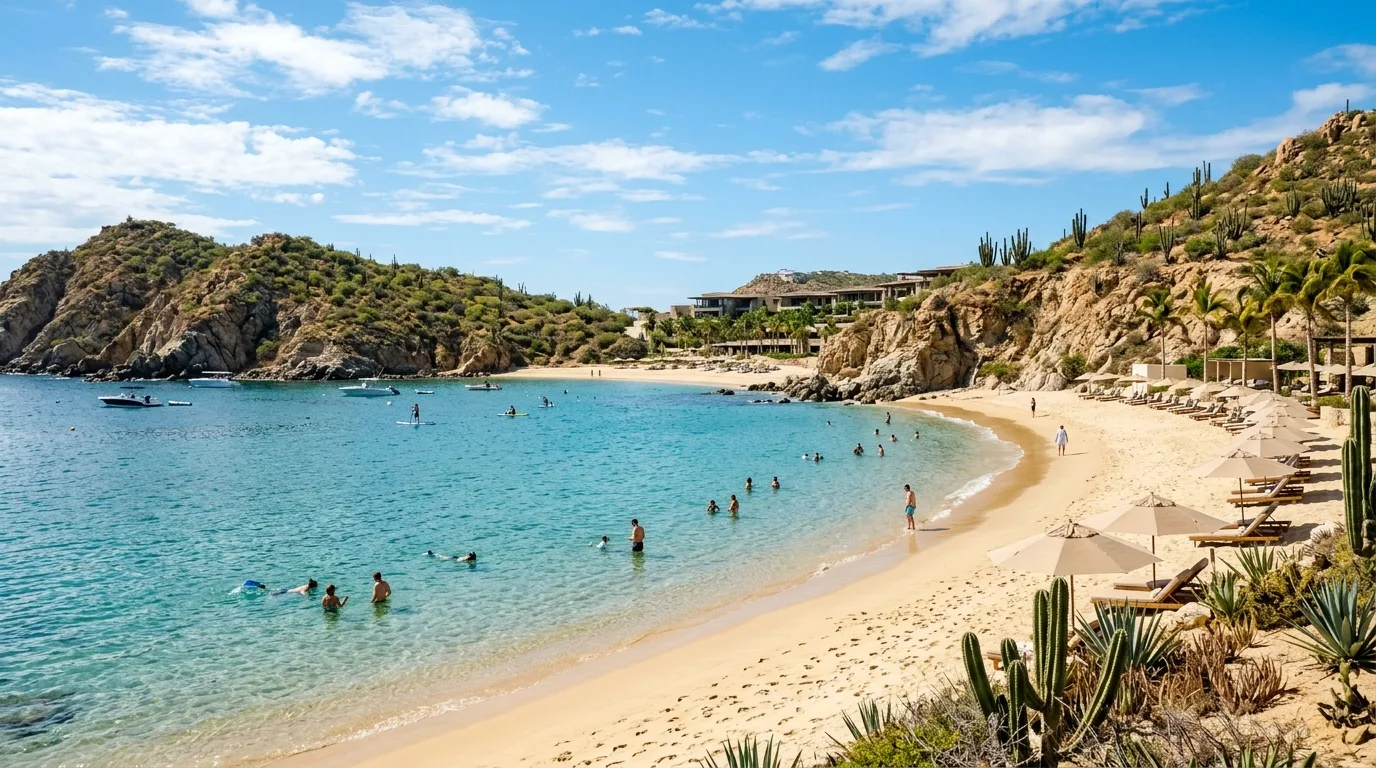
Fortunately, Los Cabos boasts several calm, Blue Flag-certified swimmable bays protected by natural coves:
- Medano Beach (Playa El Médano): Located right in Cabo San Lucas, this is the main swimmable beach in town. It features calm water, water sports rentals, sand volleyball courts, and lively beachfront dining.
- Chileno Bay (Playa Chileno): Nestled in the Tourist Corridor, Chileno Bay offers clear, shallow, wave-protected waters ideal for families, swimming, and snorkeling around colorful coral reefs.
- Santa María Bay (Playa Santa María): A stunning horseshoe-shaped bay framed by pink granite cliffs, celebrated for pristine calm waters and rich marine life.
- Playa Acapulquito: Located near San José del Cabo, known locally as Old Man’s Beach, famous for long gentle surf breaks, beginner surf instruction, and tidal swimming pockets.
Always pay close attention to safety flags posted on beaches: Green means safe conditions, Yellow signifies caution, Red indicates dangerous swimming, and Black signals absolute water closure.
6. Currency, Tipping, and Payment Etiquette
Navigating payments in Baja Sur is smooth once you know local financial conventions. Standard business practices accommodate international visitors while maintaining regional Mexican standards.
USD vs. Mexican Pesos (MXN): US Dollars are universally accepted across Los Cabos resorts, restaurants, supermarkets, and taxi operators. However, receiving your change in Mexican Pesos is standard. You will almost always get a better purchasing rate when paying in local currency (Pesos), as local vendors calculate private exchange rates that slightly favor the house.
Credit Cards & Fraud Prevention: Major credit cards (Visa and Mastercard) are accepted at nearly all hotels, established restaurants, and shopping complexes. American Express is widely accepted at luxury properties but less so at small family establishments. Always request that restaurant staff bring the wireless payment terminal directly to your table so your card never leaves your line of sight.
Tipping Etiquette: Tipping culture in Los Cabos follows standard North American patterns due to tourism prevalence:
- Restaurant Servers: 15% to 20% for good service (check your bill first to ensure propina or service charge has not already been included).
- Private Chauffeurs & Transfer Drivers: $10 to $20 USD per transfer, depending on trip distance and luggage assistance.
- Hotel Housekeeping: $3 to $5 USD per day left in clear cash notes for room attendants.
- Airport Porters & Valets: $2 to $5 USD per bag handled.
7. Local Safety, Health Guidelines, and Tap Water
Safety is often top-of-mind when vacationers review Cabo vacation planning tips. Los Cabos remains one of the safest resort destinations in Mexico, operating as a distinct geographic enclave buffered by the surrounding desert peninsula.
Crime against international visitors in primary resort districts, gated developments, public beaches, and downtown zones is exceptionally rare. Standard common-sense precautions apply: avoid leaving personal valuables unattended on public beaches, keep wallets and mobile devices secure during night outings, and rely on pre-arranged transportation for late-night transit.
Can You Drink the Tap Water?
While San José del Cabo and Cabo San Lucas operate modern municipal water treatment plants, aging local distribution pipes mean drinking tap water directly is generally discouraged for foreign travelers. All major resorts, boutique hotels, and established restaurants utilize comprehensive reverse-osmosis water filtration systems. Ice served at reputable hotels and beachfront bars is made from purified water and is completely safe to consume. When off resort grounds or exploring rural areas, stick to bottled or purified water.
8. Day Trips: Exploring Beyond the Hotel Grounds
While relaxing at your resort pool is tempting, Baja California Sur contains breathtaking natural landscapes and culture just a short drive away. Planning regional day trips reveals a whole different side of southern Baja.
- Todos Santos: Located approximately 50 minutes north of Cabo San Lucas on the Pacific coast, this official Pueblo Mágico (Magical Town) is famous for its historic sugar-mill heritage, vibrant farm-to-table culinary scene, artisan craft shops, surf culture, and the iconic Hotel California.
- La Paz & Balandra Beach: The capital city of Baja California Sur rests on the serene Sea of Cortez, about two hours north. Walk along the historic coastal boardwalk (Malecón), swim with friendly sea lions at Los Islotes, or visit Balandra Beach—frequently voted Mexico’s most beautiful natural beach due to its shallow turquoise waters.
- Cabo Pulmo National Marine Park: Located on the East Cape roughly two hours away, Cabo Pulmo harbors a 20,000-year-old living coral reef. Jacques Cousteau famously dubbed the Sea of Cortez “The Aquarium of the World,” and Cabo Pulmo offers unrivaled snorkeling and scuba diving with sea turtles, bull sharks, and massive shoals of fish.
9. Packing Essentials for a Baja Vacation
The unique desert-ocean environment of Los Cabos calls for specific items in your luggage that differ from tropical island destinations:
- Reef-Safe Sunscreen: Traditional sunblock contains chemicals like oxybenzone that harm marine life and delicate reef systems. Bring biodegradable, mineral-based zinc sunscreen for ocean activities.
- Light Evening Layers: Desert climates cool down quickly after sunset. Even during warm months, coastal evening winds can feel crisp along the ocean, making light sweaters, denim jackets, or linen wraps essential.
- Sturdy Footwear for Cobblestones: Downtown San José del Cabo and marina walkways feature rustic uneven cobblestone pavements. High heels can prove tricky—opt for stylish flat sandals, wedges, or comfortable walking shoes.
- Polarized Sunglasses & Wide-Brimmed Hat: High desert UV index ratings mean quality eye protection and sun shielding are absolute daily necessities.
Frequently Asked Questions
What is the best month to visit Los Cabos?
The overall best time to visit Los Cabos is between May and June or late October through November official Los Cabos municipal information.
Do I need to carry Mexican pesos in Los Cabos?
While US Dollars are widely accepted in resorts, restaurants, and taxis throughout Los Cabos, carrying local Mexican Pesos is beneficial. Paying in Pesos often saves money on minor purchases, street dining, and craft markets where vendors apply lower private exchange rates for US currency.
Are all beaches in Cabo San Lucas safe for swimming?
No. Many beaches in Los Cabos face dangerous ocean swells, steep drop-offs, and severe rip currents, especially along the Pacific side. Stick to protected swimmable bays like Medano Beach, Chileno Bay, and Santa Maria Bay, and always respect safety flags on public beaches.
How far is SJD Airport from Cabo San Lucas and San José del Cabo?
San José del Cabo is located about 15 to 20 minutes (8 miles) from SJD Airport. The Tourist Corridor takes roughly 25 to 35 minutes, while reaching downtown Cabo San Lucas requires a 45-to-55-minute drive along Highway 1 or the Toll Road (Libramiento).
How do I get past the airport timeshare salespeople at SJD?
After clearing customs and collecting your bags, walk continuously through the interior arrival hallway without stopping to talk with counter staff. Head entirely outside the terminal building, where pre-arranged transportation drivers and official hotel transfers wait.
Is Uber safe and available in Los Cabos?
Uber operates in Los Cabos and is safe for urban trips between towns. However, rideshare vehicles face regulatory restrictions at SJD Airport pickup zones and within select gated private resort developments. Pre-arranged private transfers remain the most seamless airport transit choice.
Is drinking water safe in Los Cabos resorts?
Major resorts, hotels, and established restaurants across Los Cabos feature advanced reverse-osmosis purification systems. Ice and tap water served in these establishments are safe. When traveling outside tourist centers, use sealed bottled water for drinking and brushing teeth.
What should I dress like for dinner in Los Cabos?
Los Cabos favors a “resort casual” to “smart casual” dress code. Elevated casual wear such as linen shirts, tailored shorts, sun dresses, and stylish sandals work standard daytime dining, while collared shirts and trousers are common for high-end dinner venues.
When can you see whales in Los Cabos?
Official whale watching season in Los Cabos runs from mid-December through mid-April. Thousands of Humpback and Gray Whales migrate from cold arctic feeding grounds into the warm coastal waters surrounding Baja Sur to mate and give birth.
Is Los Cabos safe for international tourists?
Yes, Los Cabos is considered one of Mexico’s safest international vacation destinations. The local economy relies heavily on tourism, and security presence in tourist corridors, marina districts, and beach areas is high. standard travel vigilance applies.
Final Thoughts: Planning Your Seamless Cabo Getaway
Keeping these essential things to know before visiting Los Cabos in mind ensures your getaway to Baja Sur is smooth, safe, and memorable. From matching your trip style to the right town to prioritizing ocean safety at protected swimming coves, proactive preparation frees you up to fully enjoy the natural beauty and hospitality of the region.
To start your vacation effortlessly, consider reserving your private airport transportation in advance. Arranging a comfortable, professional transfer direct from SJD Airport to your resort allows you to bypass airport arrivals confusion and relax the moment you step off your plane into the Baja sunshine.