
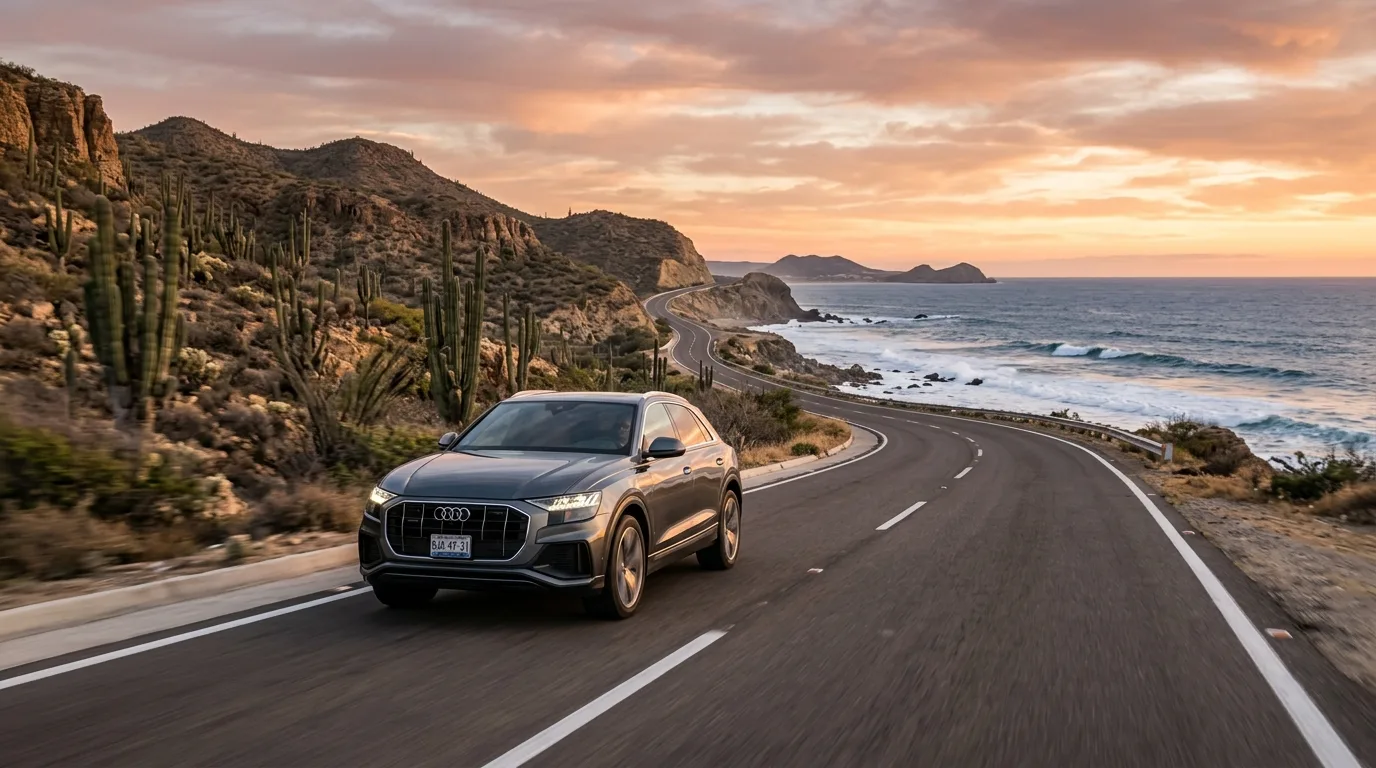
Driving in Cabo San Lucas: Complete Road Safety, Rules, & Alternatives Guide
Planning a trip to the southern tip of the Baja California peninsula raises practical questions about getting around efficiently and safely Cabo San Lucas Airport Transportation Tips.
This comprehensive guide covers everything you need to know about navigating roads in Los Cabos—from speed limits and toll highways to parking regulations, rental insurance requirements, and safety protocols SJD Airport to Cabo San Lucas Private Transfer.
Understanding the Los Cabos Road Network
The road network connecting Los Cabos is surprisingly straightforward, but understanding its geography is crucial for smooth navigation SJD Airport Pickup Guide.
The Highway 1 (Transpeninsular) Corridor
Federal Highway 1, locally known as the Carretera Transpeninsular, is the main lifeline of the region Private Airport Transportation Los Cabos Guide.
Most major beachfront resorts, golf courses, and residential communities are situated directly along this highway Suburban Airport Transfers Los Cabos.
The Toll Road (Libramiento 1D)
The Libramiento de Los Cabos (Highway 1D) is a modern toll highway designed to bypass downtown San José del Cabo and the congested Tourist Corridor SJD Airport to Pacific Zone Transfer.
- Travel Time Efficiency: Cuts drive time from SJD Airport to Cabo San Lucas down to roughly 35–45 minutes by bypassing corridor stoplights.
- Toll Payment: Toll gates accept Mexican Pesos (MXN) and U.S. Dollars (USD), though paying in exact pesos is always preferable to ensure accurate change.
- Road Conditions: Features smooth pavement, clear signages, and controlled access points, making it the preferred route for professional airport chauffeurs and experienced drivers.
Essential Mexican Driving Rules and Local Traffic Laws
Understanding local rules and Highway 1 Mexico driving rules in Los Cabos ensures you avoid unnecessary traffic stops or safety hazards during your trip.
Speed Limits in Kilometers per Hour
Speed signs in Mexico are displayed strictly in kilometers per hour (km/h), not miles per hour Official Los Cabos Tourism Board.
| Location / Road Type | Typical Speed Limit (km/h) | Approximate Equivalent (mph) |
|---|---|---|
Speed traps are common along Highway 1, particularly near hotel zone entrances, pedestrian overpasses, and urban entry zones where speed limits drop suddenly from 90 km/h to 60 km/h.
Right-of-Way, Topes, and Roundabouts
Local driving culture involves specific infrastructure elements that require careful handling:
- Topes (Speed Bumps): Found throughout urban areas, side streets, and near crosswalks. Topes range from minor asphalt ridges to massive concrete humps that can damage rental car undercarriages if struck at high speed. They are not always painted yellow or clearly marked with warning signs, so maintaining vigilant speed control on side roads is vital.
- Glorietas (Traffic Roundabouts): Widely used in San José del Cabo and downtown Cabo San Lucas. Vehicles already inside the roundabout have the right-of-way. Signal your intention when exiting.
- Retornos (U-Turns): Left turns across oncoming traffic on Highway 1 are rare. Instead, drivers use designated retorno ramps on the right or center lanes to safely execute U-turns to reach hotels on the opposite side of the highway.
Is Driving in Cabo San Lucas Safe for Tourists?
A primary consideration for many visitors is asking: is it safe to drive in Cabo San Lucas? Generally speaking, Baja California Sur is considered one of the safest states in Mexico for tourists, and violent crime targeting drivers on main highways is extremely rare. However, safety hazards are largely related to infrastructure conditions, unfamiliar road design, and local driver behavior.
Daytime vs. Nighttime Driving Considerations
Driving during daylight hours along major highways is usually manageable for drivers accustomed to suburban traffic. However, driving after dark presents heightened risks that require caution:
- Unlit Highways: Large sections of Highway 1 and rural roads leading toward East Cape or Pacific beaches lack overhead street lighting.
- Free-Roaming Livestock: In rural sections and near highway shoulders outside urban centers, cows, horses, and donkeys frequently stray onto the warm asphalt after sunset, creating severe collision hazards.
- Pedestrians and Cyclists: Pedestrians occasionally cross Highway 1 outside designated overpasses under dim conditions.
Navigating Local Traffic and Unpaved Roads
While main highways are smooth, navigating roads in San Jose del Cabo and backstreets of Cabo San Lucas often brings unexpected challenges. Many secondary streets leading to private villas, secluded beaches (such as Santa Maria or Chileno access roads), or local taco spots consist of unpaved dirt or cobblestone full of deep ruts.
Furthermore, local drivers frequently execute sudden lane changes without signaling or stop unexpectedly to unload passengers Los Cabos International Airport Official Info.
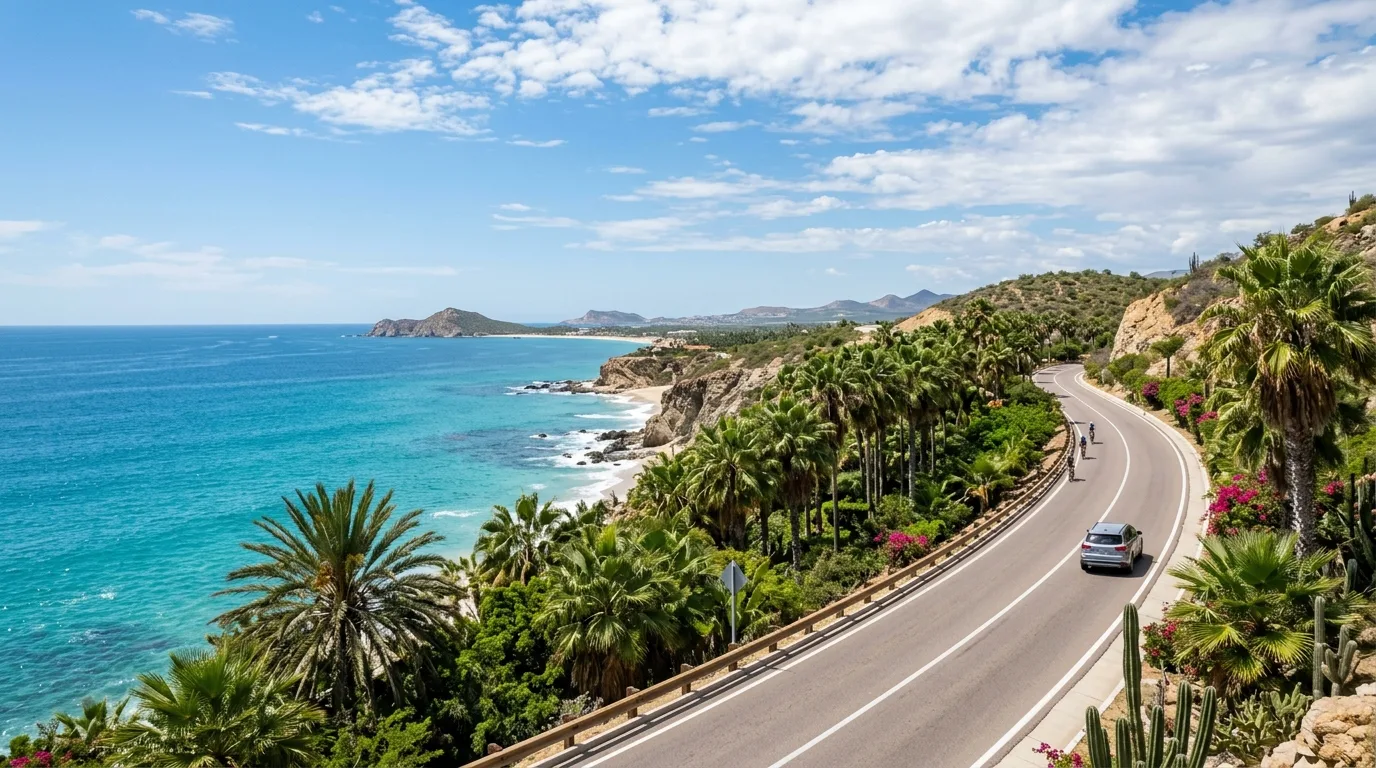
Renting a Car vs. Hiring Private Airport Transportation
Choosing between renting a car or booking a private airport transfer service depends on your itinerary, budget, and desired comfort level. Comparing both options helps you determine the best approach for your vacation.
The True Cost of Car Rentals (Insurance & Hidden Fees)
When researching vehicle rentals online, visitors often see astonishingly low daily rates, sometimes under $10 USD per day. However, these baseline rates rarely reflect the actual final cost due to mandatory Mexican insurance requirements.
- Mandatory Third-Party Liability (TPL): Under Mexican law, legal liability insurance issued by a registered Mexican insurer is non-negotiable. Foreign auto policies and credit card insurance coverage rarely satisfy Mexican legal third-party liability requirements. Mandatory TPL frequently adds $20 to $45 USD per day at the rental counter.
- Collision Damage Waiver (CDW): While your credit card may offer CDW, rental agencies in Cabo often hold substantial security deposits (often $1,500 to $4,000 USD) on your credit card if you decline their internal CDW package.
- Fuel and Parking Costs: Gas prices in Mexico are structured per liter, and parking fees in downtown districts add up quickly.
Stress-Free Travel with Professional Drivers
For travelers whose vacation goal is complete relaxation, avoiding vehicle rentals altogether is often the preferred choice. Utilizing a dedicated private transfer service offers distinct advantages:
- Zero Driving Stress: No navigating aggressive highway merging, searching for parking, or worrying about non-english traffic stops.
- Door-to-Door Convenience: Direct travel from SJD Airport terminal doors directly to your resort check-in desk or private rental villa.
- Fixed Upfront Pricing: Clear, predictable costs without unexpected insurance add-ons, security holds, or fuel refills.
- Safety and Comfort: Chauffeured luxury SUVs and spacious vans equipped with air conditioning, bilingual professional drivers, and full commercial passenger insurance.
| Factor | Rental Car | Private Airport Transportation |
|---|---|---|
Gas Stations, Pemex Etiquette, and Payment Tips
If you do end up driving in Cabo San Lucas, refueling your vehicle requires knowing local gas station procedures. All gas stations in Mexico (such as Pemex, OXXO Gas, BP, and Shell) are full-service; drivers do not pump their own fuel.
- Verify Meter Reset: Before the attendant begins pumping fuel, check that the pump meter displays “0.00” pesos. This prevents being charged for the previous customer’s purchase.
- Specify Fuel Type: Clarify whether you need Magna (regular unleaded, green pump) or Premium (high octane, red pump). Most rental vehicles run standard Magna or Premium as specified in your rental agreement.
- Payment Methods: While credit cards are widely accepted, card machines occasionally experience signal drops. Always carry sufficient cash in pesos for fuel payments. If paying with cash, announce the bill denominations aloud to the attendant (e.g., “Here is a 500 peso bill”) to avoid confusion over change.
- Tipping Attendants: It is customary to tip the gas station attendant between 10 to 20 pesos for standard service, or more if they clean your windshield or check tire pressure.
Parking and Navigating Downtown Cabo San Lucas
Parking in downtown Cabo San Lucas, especially around the Marina, Medano Beach, and dining districts, can be challenging during peak tourist seasons.
- Curb Markings: Pay close attention to street curb colors. A red curb indicates strict no-parking zones where vehicles will be ticketed or towed. A yellow curb usually indicates loading zones or restricted parking. Unpainted or white curbs generally permit street parking, provided there are no overhead signs stating otherwise.
- Pay-Parking Lots (Estacionamientos): Utilizing secured paid parking lots near the Marina or Puerto Paraíso mall is significantly safer than searching for scarce street parking. Rates are generally modest (hourly) and protect your vehicle from accidental scratches or break-ins.
- Never Leave Valuables Exposed: Just as in any major tourist destination, keep bags, cameras, and luggage out of view inside parked vehicles.
What to Do at Police Checkpoints or Traffic Stops
Navigating roads in Los Cabos occasionally includes passing through routine military or municipal police checkpoints, as well as potential traffic stops for minor infractions like speeding or failing to make a complete stop.
When reviewing renting a car in Cabo safety tips, knowing how to handle police interactions properly helps maintain peace of mind:
- Routine Checkpoints: State police or military forces conduct security checkpoints along Highway 1 and city entrances. Slow down, turn on your interior light if at night, keep your hands visible on the steering wheel, and follow the officer’s instructions. In most cases, tourists are waved through after a brief greeting.
- If Pulled Over for a Traffic Violation: Remain calm, polite, and respectful. The officer will explain the infraction and request your driver’s license, vehicle registration, and rental agreement.
- Handling Fines Legally: If an officer claims you committed a violation, they are required by law to issue a written ticket (multa). Under Mexican traffic law, you are entitled to pay the fine directly at the local police station (Tránsito), which often provides a discount for prompt payment within a few days.
- Avoid Unofficial Cash Payments: Never offer or agree to pay an informal cash fine (“mordida”) on the spot. Request the written ticket calmly and state that you will pay it officially at the station or return the paperwork to your rental vehicle agency.

Route Breakdown: Driving from SJD Airport to Cabo San Lucas
For visitors who opt to drive themselves from Los Cabos International Airport (SJD) to Cabo San Lucas, understanding the primary direct route helps avoid getting lost upon arrival.
- Exiting Airport Terminals: After clearing customs and retrieving luggage, follow signage leading toward highway exits. Avoid stopping in the middle of the sales hallway (“the shark tank”) where timeshare representatives pose as airport transportation staff.
- Selecting Your Highway: Shortly after leaving the airport perimeter, you will reach a main junction offering two distinct choices:
- Route A (Libramiento Toll Road 1D): Follow signs marked Cabo San Lucas Cuota. This path bypasses San José del Cabo completely, offering a smooth, fast, 35-minute drive straight into Cabo San Lucas.
- Route B (Highway 1 Free Road): Follow signs for San José del Cabo / Cabo San Lucas Libre. This route takes you through downtown San José del Cabo stoplights before reaching the Tourist Corridor. Expect slower traffic and heavy resort congestion.
- Arriving in Cabo San Lucas: As Highway 1D or Highway 1 enters Cabo San Lucas, the road converts into Boulevard Lázaro Cárdenas, leading directly toward the Marina, hotel zone, and downtown district.
Frequently Asked Questions
Can I drive in Cabo San Lucas with a U.S. or Canadian driver’s license?
Yes, valid driver’s licenses issued in the United States, Canada, the United Kingdom, and EU countries are legally recognized in Mexico for tourists. You do not need an International Driving Permit (IDP) as long as your home driver’s license remains valid throughout your stay and is printed in the Latin alphabet.
Is driving from SJD Airport to Cabo San Lucas difficult for first-time visitors?
Driving from SJD airport to Cabo San Lucas via the Libramiento 1D toll road is straight forward and well-paved with clear directional signs. However, driving via the free Highway 1 corridor requires managing dense hotel traffic, multiple U-turn lanes, and fast-moving local drivers, which can feel stressful for first-time visitors.
Is drinking and driving strictly enforced in Los Cabos?
Yes, Mexico enforces strict blood-alcohol concentration laws, and driving under the influence is a serious criminal offense. Los Cabos police regularly conduct sobriety checkpoints (alcoholímetros) along major nightlife areas and Highway 1. If you plan to enjoy alcoholic beverages, always designate a sober driver or book private transportation.
Do I need full coverage insurance when renting a car in Cabo?
Mexican law requires third-party liability coverage issued by a licensed Mexican insurer. Credit card insurance rarely fulfills legal liability requirements in Mexico. Obtaining full coverage (Liability plus Collision/Theft) directly from the rental provider offers maximum financial protection and prevents large security holds on your credit card.
What should I do if I get involved in a minor fender bender?
In Mexico, if an accident occurs, leave your vehicle in place unless instructed otherwise by authorities. Call your rental car company’s emergency hotline immediately, along with local police if required. The rental agency will dispatch an insurance adjuster to the scene to assess damages and complete necessary paperwork.
Are GPS navigation apps like Google Maps and Waze reliable in Los Cabos?
Yes, smartphone navigation apps like Google Maps, Apple Maps, and Waze function well across major urban corridors in Los Cabos official Los Cabos municipal information.
What are “topes” and how do I handle them when driving?
Topes are speed bumps commonly placed near pedestrian crossings, residential streets, and rural highway intersections. They vary greatly in size and are not always painted clearly. Drivers should reduce speed significantly when approaching intersections or town entrances to prevent severe vehicle undercarriage damage.
Is it safe to drive at night between San José del Cabo and Cabo San Lucas?
Driving between towns along Highway 1 at night is manageable, but requires heightened alertness due to unlit stretches, high speeds, and poor visibility. Rural roads outside the main tourist corridor should be avoided at night due to unlit obstacles, free-roaming livestock, and lack of immediate emergency assistance.
How much cash should I carry for tolls and gas stations?
Carrying roughly 500 to 1,000 Mexican Pesos in cash is recommended for a day of driving. This easily covers toll charges on Highway 1D (around 100-200 pesos depending on distance) and small fuel purchases, while ensuring you have exact change at gas stations or parking meters.
What is the best alternative to driving myself in Cabo San Lucas?
The safest and most stress-free alternative is pre-arranging private airport transportation. Professional private transfer services provide luxury, air-conditioned SUVs or vans driven by licensed bilingual chauffeurs. This eliminates rental counter delays, insurance worries, traffic navigation stress, and parking headaches entirely.
Conclusion: Making the Right Travel Choice in Los Cabos
Mastering the basics of driving in Cabo San Lucas opens up opportunities to explore Baja California Sur, but it also comes with real responsibilities—from dealing with complex rental insurance requirements to negotiating high-speed highway merging and scarce downtown parking. While confident travelers can successfully handle local roads by exercising caution, many vacationers find that managing foreign traffic takes away from their rest and relaxation.
If you prefer a seamless, elevated travel experience without the hassle of vehicle rentals, toll booths, or directional stress, pre-arranged chauffeured transport is the ultimate solution. At Choya Transportation, we offer premium private transfers featuring comfortable suburban vehicles, professional bilingual drivers, and reliable door-to-door service across Los Cabos. Allow us to take care of the driving so you can focus on enjoying every moment of your tropical getaway.